Our work in Democratic Republic of Congo
Clean Energy, Good Governance, Protected Ecosystems
Clean Energy, Good Governance, Protected Ecosystems reflects Good Life Foundation’s integrated approach in the DRC to protecting nature by promoting clean cooking solutions that reduce deforestation and emissions, while strengthening good governance and peaceful community leadership to prevent conflict-driven environmental destruction and ensure sustainable, community-led stewardship of natural resources.
GOLF is implementing the GCCE- QIP- #1 – DRC: Gas Clean Cooking Energy in Quintuplet Impact Project in DRC.
Project Background in Eastern Region of the Democratic Republic of Congo
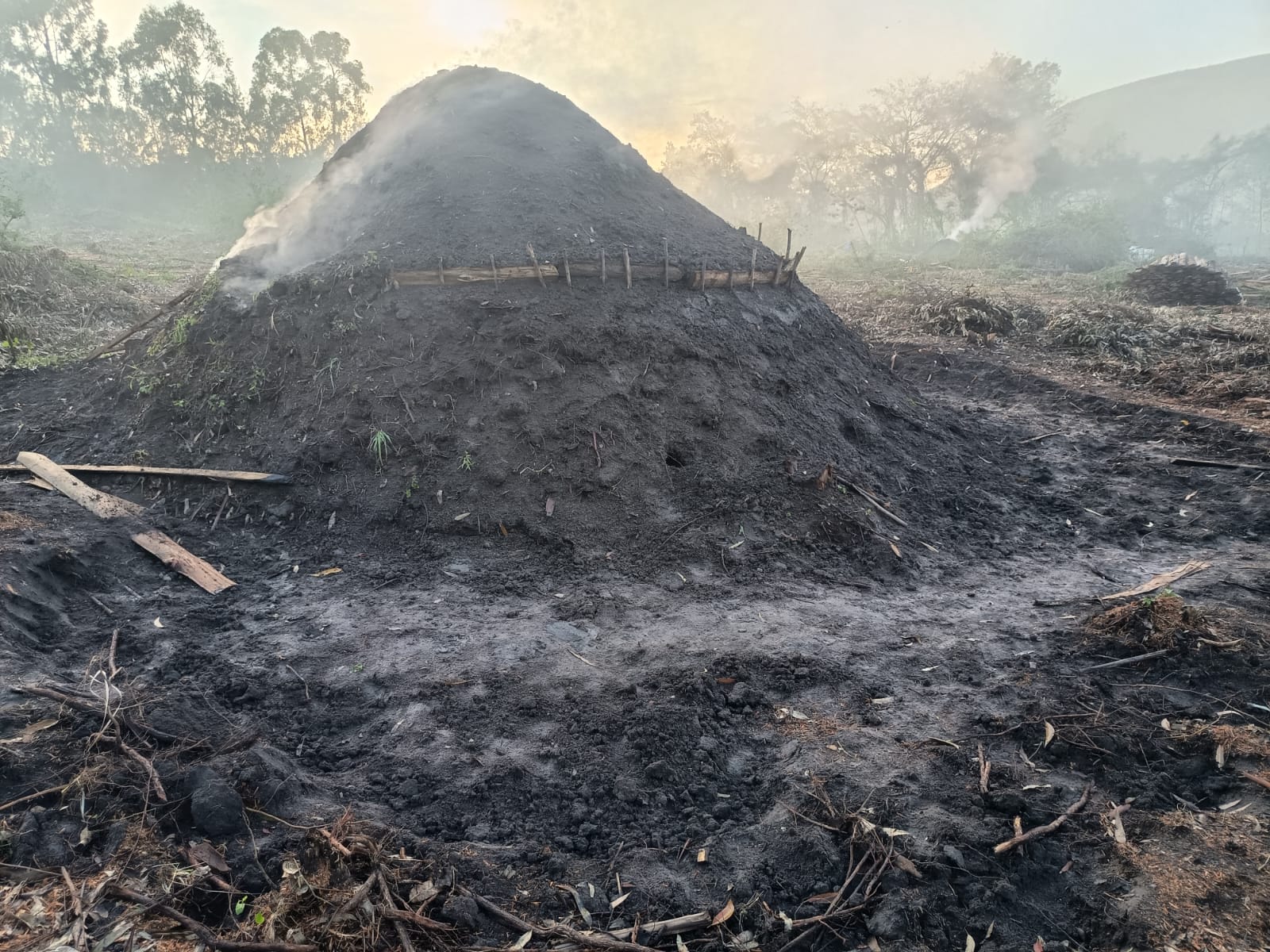
The central region of Africa was and remains cruelly plunged in war for more than three decades so far, war generated conflicts in which more than 150 armed groups have been formed and which chose to hide in the rich and diverse ecology. The most victim is the Universe, facing climate severe damaging effects resulting into elevation of sea temperature due to increment of CO2 and other toxic gases as forests /parcs -trees are violently, abusively ravaged for the sake of producing wood fuels whose most dominantly utilized is Charcoal; they are sold to generate income which is in return partly financing war, enriching the war seniors, neighboring countries under purposes of powering cooking in households, institutions, parties, events etc. Illicit exploitation of charcoal and fire woods is an illicit business turned into earning of survival means.
As of now, the matter is at red indicators alert; the Democratic Republic of Congo itself has lost 6,86 Mha of humid primary forest making up 36% of its total tree cover loss from 1990-2023, it is 6,6% decreased out of 85% of its normal range from 2002 -2023(Global Forest Watch).
Basing on GOLf ‘s Environment Monitoring Data (GEMD), up to 100 trucks transporting timbers and charcoal were counted in a single day at military security checked point of KIBUMBA village in the Nyiragongo territory in the Virunga Parc, North-Kivu on October 13, 2022, on October 18, 2022 in Kinshasa at Terminus point in Nsele Commune where we monitored trucks from Bandundu province; 10 trucks were seen each two hours with charcoal and hard core timbers, besides these, 4 trailers with massive logs of timbers were seen taking sea direction and on July 26, 2023 at Mudaka market entry in South-Kabare Territory, South-Kivu, where 28 trucks transporting charcoal and timbers from Kahuzi-Biega National Parc were counted within 6 hours.
A motorcycles mark GLX were seen, transporting up to 6 bags of charcoal and 125 were counted in that single day; one sack of charcoal weighs between 75 and 100 kgs. At the check point, the trucks and motorcycles are imposed roadside stopping, drivers and riders must put money in their right hands, fold fingers on it, they go and meet the meet the soldier, greet them with that hand to bribe him; the action simply means buying pass, afterwards, the military grants let go. The final stage for these wood fuels is town market for commercial interests, to households, hotels, restaurants and other end user organizations.
It is regrettable finding security services (soldiers) of regular army FARDC involved into this illicit business. Nsabimana, a resident of Kibumba explained the way they deal; they are charcoal making sites in deep Virunga Parc forest held by them, we go and stay there for up to one of two weeks, then we comeback with charcoal, ” but it is a risky zone he said “.
Deforestation is doing well in the Democratic Republic of Congo, the country lags in proposing measures prior, either applying stiff policing or adoption of strategies capable constrained wood fuels usage in cooking. Not only Flora is affected; yet thinking so, our lantern is lit by palpable research that realized how the entire biodiversity is sacrificed, harmed with no rescue stopping measures. The 1000 types of trees and the 10,000 species of animal including forest elephants, Gorillas, Chimpanzees, okapi, Leopards, Hippotamuses, Lions, Monkeys, Rhinoceros etc. all is in tag of poaching of which we are busy calculating the loos in monetary terms. With 107 million hectares absorbing 1,2 billion tons of C02, the second world buffer against climate change is set ablaze (data of the ministry of environment of the DRC, January 2023).
The cost of a sack of charcoal at end user’s hand is evaluated between 20 and 30 US$. Analysis herein, used medium rate of 25 US $ as cost for purchase of 1 bag of Charcoal across DRC’s provinces, and same price in neighboring countries such as Burundi, Uganda and Burundi.
This work sampled Virunga National Parc illicit charcoal production, as we counted up to 1750 bags in a day, making 52,500 in a month and 630,000 bags in a year. Such a circuit earns US$ 14, 437,500 in a month and US $ 173,250,000 yearly in 11 regions and a less estimate of US $ 5 billion 197 million and five hundred thousand (US$ 5,197,500,000) billion that DRC loses across her 11 provinces out of illicit exploitation of charcoal alone within the three war decades starting from 1994 when it hosted 2 million Rwandan refugees up to the year 2025.
They are herein two challenges the project aims at overcoming:
- Rural Exodus:
There is 48,517,567 million people living in slums in cities as they are escaping to grown war -weariness and insecurity in their respective villages.
The armed groups like ADF, FDLR, M23 and many more others invaded villages, they sieged educational infrastructure, broke all around and used desks, timbers and sticks as combustibles;10 schools were attacked and destroyed in the part of the year 2023, the attack means loss of everything (total infrastructure and equipment plus its ecology).
- Due to the armed groups attacks and fights against the regular army FARDC, 5 million people were internally displaced this year; the consequence is worse and impacts negatively livelihoods of citizens;
- 5,4 million people starving of hunger in the province of Ituri, North-Kivu and South-Kivu (Report of UNWFP November 21, 2024);
- 37% of the population is malnourished
- 36% of children under 5 years stunted
- 6,6% of children under 5 five years are wasted
- 7,6% of children die before their five years after birth etc. ;(Global Hunger Index)
- In overpopulated urban areas, Charcoal is majorly the top of topics about wood fuels.
Amongst the contributable factors to environmental detrimental activities is electricity shortfall, lack of access by the population in DRC; only 21,50% out of 105 million of Congolese consume electricity up to the year 2022(Macrotrends Data), the savior fuel is charcoal. The events that consume excessivement charcoal and fire wood in DRC match with the respective ranks; [1] Cooking in the10 million households, [2]restaurants and hotels, [3] weddings’ catering services : 1,183 were officially celebrated in 2023 , [4] birth parties: 30, 175 happed in 2022, [5] Send off events : 783 in 2023, Orphanages, in ironing clothes at 1% and 2 % lost in transportation and in sale dust.
If nothing ingeniously conducted is done from now, the DRC’s forest; the world second largest ecosystem will be a Savanna or a desert, as so done, could probably happen across Africa, and half of the world would be emptied of its population at the end of this century.
The LP Gas Clean Cooking for Environment Quintuplet Impact Project (GCCE-QIP- #1-DRC) was identified and designed by Good Life Foundation to fit as durable solution against the height of the illicit exploitation of Charcoal; it is a limit five pluripotent impact project on ground in the Democratic Republic of Congo across its 26 provinces. The success will be replicated in other countries presenting world climate harming indicators such as Burundi, Uganda and in those having connection to this natural reserve. This project is entailing impact through below components:
- Environment safeguard:
-Gas Clean Coking Solutions Impact: GCCSI. Conducting massive countrywide sensitization over utilization of Liquefied Petroleum Gas and facilities in homes, restaurants, hotels and in all charcoal using entities. The project launched a series of activities calling communities to twist traditional habits, from illicit ecological devastating businesses including charcoal, fire woods to utilizing LPG cylinders by each household uncovered by electric grid. Below is the project activities breakdown in sensitization though inception phase:
- campaigns, workshops extended to local leadership and communities, media broadcasting, flyers handouts, sign posting and movies alerts, word of mouth messaging and church announcements;
- Identification of charcoal traders and form GIG (Gas Innovative Group)
- 1 GIG is formed by street; making 62 GIGs at country level; and 3 groups at province level;
- Each GIG is composed of 40 members, 3groups formed at region level;
- GOLf is providing trainings regarding environment Safeguarding, gas clean cooking solutions and safety, connect the GIGs to LP Gas equipment and to gas selling stations;
- Undertaking environment protection Policy proposal designing and collaborate with levels for its integration in activities implemented by partners.
- Activities monitoring and evaluation;
The project is establishing partnership with the government and renowned suppliers of LPG equipment locally, regionally and internationally; a strategy linking households, hotels, restaurants and various institutions to Gas selling stations and project beneficiary to support providing necessities described in the GCCE-QIP#1-DRC portfolio to render effecient our goal.
- Trained security services with Golf teams are keenly keeping close eye on policy implementation, environment protecting codes, law enforcement monitoring and security of campaign teams whether in city or in rural areas. The campaigners use banners, flyers, megaphones and sign pots to vulgarize and communicate to communities. The following is the communicated message:
Stand for stopping charcoal in our homes; it is funding war – conflicts and harms climate, we are now using < Gas Clean Cooking Energy> to protect our families, our country, our region, Africa and our world. Gas is clean energy for clean home cooking, clean women for safer living.
- Livelihoods for community resilience
The component will allocate funds to sub-component (i) for purchase and delivery of LP Gas Cylinders to 2,000 households in each province; making 52,000 households statewide whom responsible fall into disabled, poorest of poor and war affected with protocollary accepted. The component will expeditiously assess abled individuals from 26,000 disabled and poorest households, identify one Household Representative (HR) in each. The representatives will be the principal respondent of their households under the project implementation, they will benefit enrollment, financial literacy trainings, bank account opening, and more project interventions. The project will scale up financial support to their accounts for targeting initial households’ enterprises that generate income usable to unlock livelihoods patterns for household economic sustainability and progressive means for providence of Gas fuel-energy from the profits made.
The component will swiftly and promptly avail appropriate technical guidance to establishment of the HR businesses by playing the key roles [1] assessing their business plans, provide guidance where needs rise, [2] financial support and disbursement to their accounts, guide on fund withdrawal, [3] monitor businesses’ implementations in sub-component (i) and establish 3 Physical Market Halls ( PMHs) in each of the 26 provinces and score up to 78 of them in sub-component (ii) and [4] create inter-linkage within the HR businesses and networking linkage with other community private sectors to ensure flux of financial operations and flow of capital as strategy bolstering statewide social economic growth that swallows the gap which would have occurred from closure of charcoal illicit trade by government stiff policy enforcement.
- Education & Health systems:
Establishment of Environment Protection Educational Colonies (EPECs) and Medical Study and Drugs Fabric Plant Construction MSDP
The component will concern the eastern region of DRC which lost educational and health infrastructure within the 3 decades of war timeline from 1996 up to date and of which effects impacted negatively advancement of children and youths. The project will implement construction of 9 Educational Protection Education Colonies (EPECs) in the provinces including Ituri, North-Kivu and South-Kivu in sub-component (i); the EPECs fall in features of Construction of 3 EPECs in each of the three provinces, they are modern schools, established on 10 hectares of land each, out of which 2 hectares for construction of school infrastructure, 3 hectares for school woodlot and five hectares for school agribusinesses, the school woodlots are especially apiary projects whose plants are herbs, fruit trees, vegetables , bushes, clover, flowers, shrubs , blossoming etc. The EPECs will be fully equipped to primary school and secondary school standards. The agribusinesses in ECs are shaped by accuracy of technology and good farming practices, each of the 15 hectares in each province will produce 4-6 tons of produce in a season; a total of 180 tons out of the overall hectarage across the 9 ECs of GCQIP-#1-DRC, and the farm are demonstration sites for livelihoods upskilling of students and of the project beneficiary communities. In sub-component (ii) the project aims at construction of a mini-drugs fabric plant which will collect honey yield and process drugs out of it for human therapeutics. The drug fabric plant will be constructed in South-Kivu preferably. The strategy will groundbreakingly spur an innovation explosion for youth empowerment and development of science as project impact.
- Solar Powered Solution to Draught in DRC
–Defiance to Climate Change: DCC
The farms and woodlots under GCCE-QIP-#1-DRC will systematically apply irrigation scheme to prevent climate damaging effects to crops, to harness on yield, scale up production and leverage land utilization to annum spectrum of exploitation while complying to biological production of produces and food items. Communities will benefit adapted trainings that equip them with new technologies and such skill set will drive replication to households’ economic traditional livelihoods.
- Policy Support, Monitoring and Evaluation
The project will support the national and local level of project activities coordination, including Monitoring and Evaluation (M&E) and Information Storing System (ISS), fiduciary management, communication and engagement of citizen and environmental social safeguards management and compliance. Project management under component 1 will be implemented by government policy support through Ministry of Environment and natural resources protection of DRC for new integrated approach of stopping trees logging and charcoal making at nationwide to enhance community adherence to clean energy usage.
- GOLF is laterally carrying out several activities pursuing Peace achievement, good governance, rule of law, access to justice, peaceful coexistence in new approach of living in diversity through multiculturalism; among others:
- Petition circular signing: elevation to world dimension voices of war affected communities in seeking the integration of multiculturism in countries at war. The same petition is calling world decision makers including western powers to determinedly act against long hanging conflicts and suffering of communities in areas specified thereinafter;
- Conferences, conventions, conclave and summits-forums: Spot momentum targeting leaders as audience, to trigger challenging ideation as we aim at awakening conscience and inoculation of strict discipline in management of political affairs of their respective led countries.
- Campaigns and workshops: mean to attain communities and local leaders when communicating skills which inspire change in their living environment.
- Media communication cover: addresses the harm caused by human hand habits to the ecosystem and encourages communities to undertake corrective required measures for restoration of damaged ecological propertiesh.
Advancing Clean Cooking and Ecosystem Protection in the DRC
Good Life Foundation conducted a series of research and assessments in the Democratic Republic of Congo, within a five year -period, through which this foundation here by appeal, in recognition of acquired consummate understanding over problematic upon shrieking levels of deforestation, on quest of wood fuels (Charcoal and firewood) and its complexity on ground, its imposed peril and endangerments to more than 90% of Congolese households , to regional and global populations by day to date burning of the world second largest ecosystems( the Congo Rain Forest), matter worsening by intertwined severities of deforestation happening in neighbor countries such as, Burundi and Uganda; all grafted to the range surpassing levels of pauperdom and disability of populations living in war and conflicts affected countries, regionally, and put in account the political instability alimenting electricity shortfall in the East and central regions of Africa; they are factors that led Good Life Foundation to delegate astuteness in collaboration with communities to design the LIQUEFIED PETROLEUM GAS CLEAN COOKING ENERGY IN QUINTUPLET IMPACT PROJECT, in acronyms of LP GCCE-QIP- #1- DRC. The project intendedness is implementation in the Democratic Republic of Congo and find extension to the entire region, as ultimate solution to deforestation and climate rehabilitation.
Project proposal link:
The project is purposed to:
- Conduct nationally sized and road mapped community and institutional awareness, that drive twisting of traditional behavior and culture of community cooking into innovated Clean Cooking Energy for human and environmental safety.
- Deliver LP Gas starter equipment (Cylinders etc.) coupled with socio- economic empowerment of beneficiaries; they are Disabled, poorest of poor individuals and render them the Environment Watchdogs nationally and regionally.
- Promote environment protection and formal education together.
- Innate medical research oriented to fight carbon dioxide and other gasses’ toxicity.
- Promote activities targeting food production scaling up by solar powered solution in irrigation.
By the current phase, this foundation is pulling in with advocacy, fund-raising to meet required resources to potentially enable implementation of this project; either in fully funding scheme or in components funding separately.
Good Life foundation expresses gratitude to any volunteer, willing to help addressing the environmental shambles clogging up worldwide climate, rescuing the World second largest natural forest.